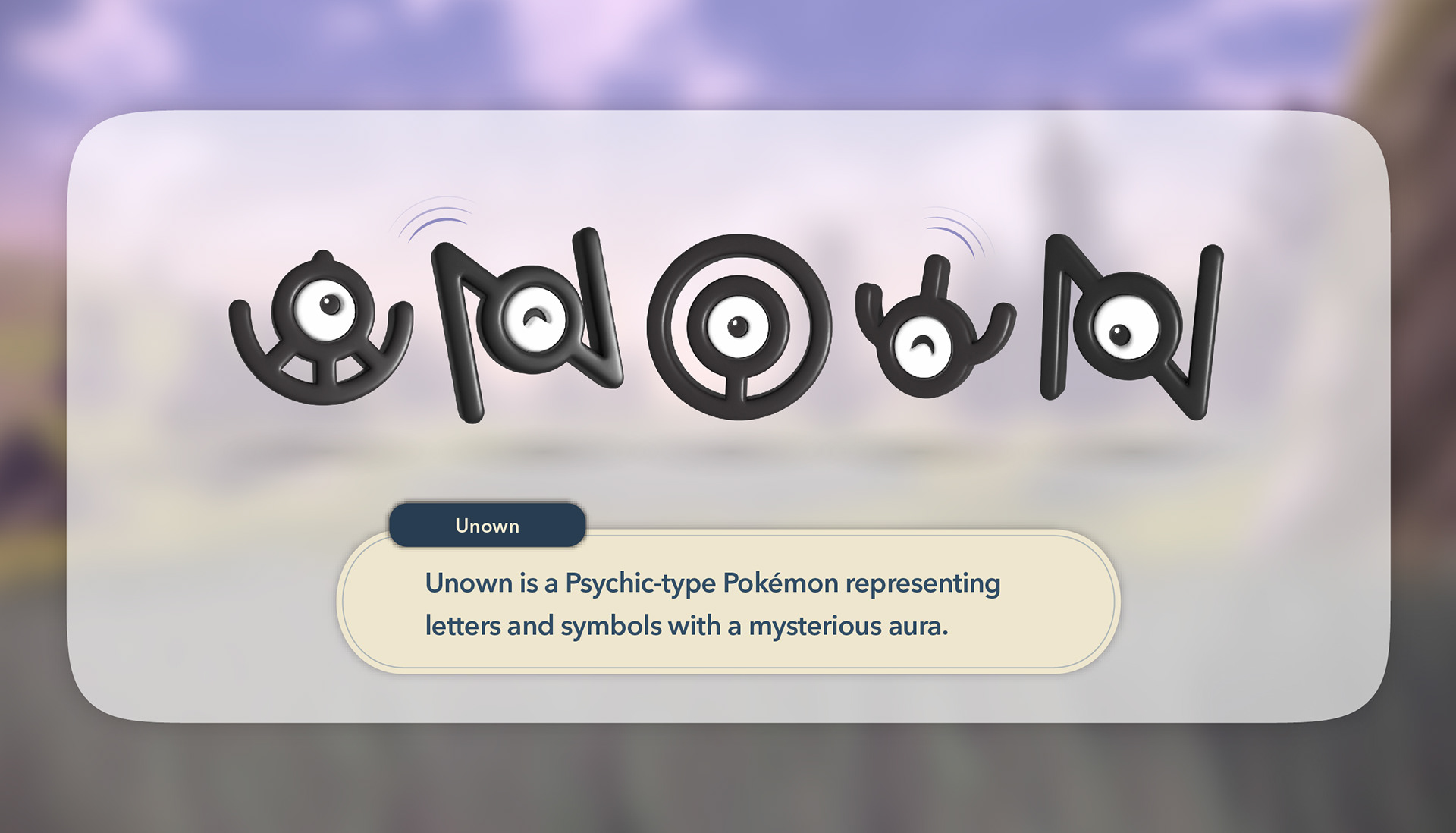
Unown is one of the most unusual Pokémon. Its forms resemble letters and symbols rather than traditional creatures.
This project explores how Unown's mysterious glyph-like shapes can function as a complete typographic system. I reconstructed each of the 28 forms using vector geometry in Adobe Illustrator and developed them into a working OpenType typeface.
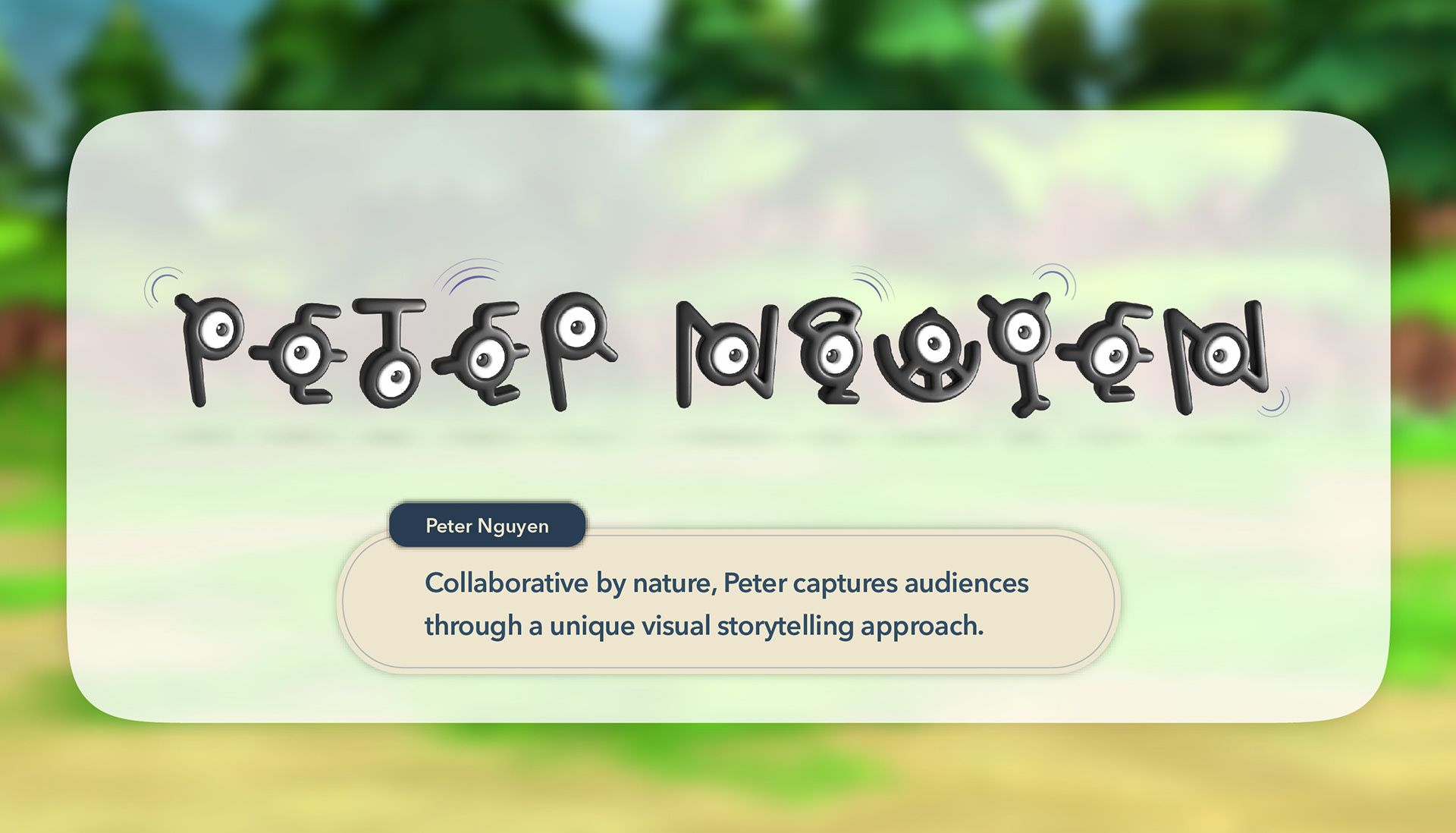
To further explore their dimensional qualities, I also created 3D interpretations of the characters, giving the forms depth while preserving the visual language established by Pokémon’s original character designer, Ken Sugimori.
Design Challenge
Unown is equal parts Pokemon and a symbol system. The challenge was translating its organic forms into a coherent typographic structure while maintaining the recognizable personality of each Pokémon.
Key considerations included:
• Maintaining fidelity to the original character designs
• Standardizing proportions for consistent typography
• Designing shapes that remain legible as letters
• Creating vector forms that could function within a font file
Process
Character Study: I began by studying the visual grammar of Unown.
Each form follows a shared structure:
• Circular eye core
• Minimal appendages
• Simple geometric silhouettes
Understanding this structure allowed me to reconstruct the characters using consistent vector geometry.
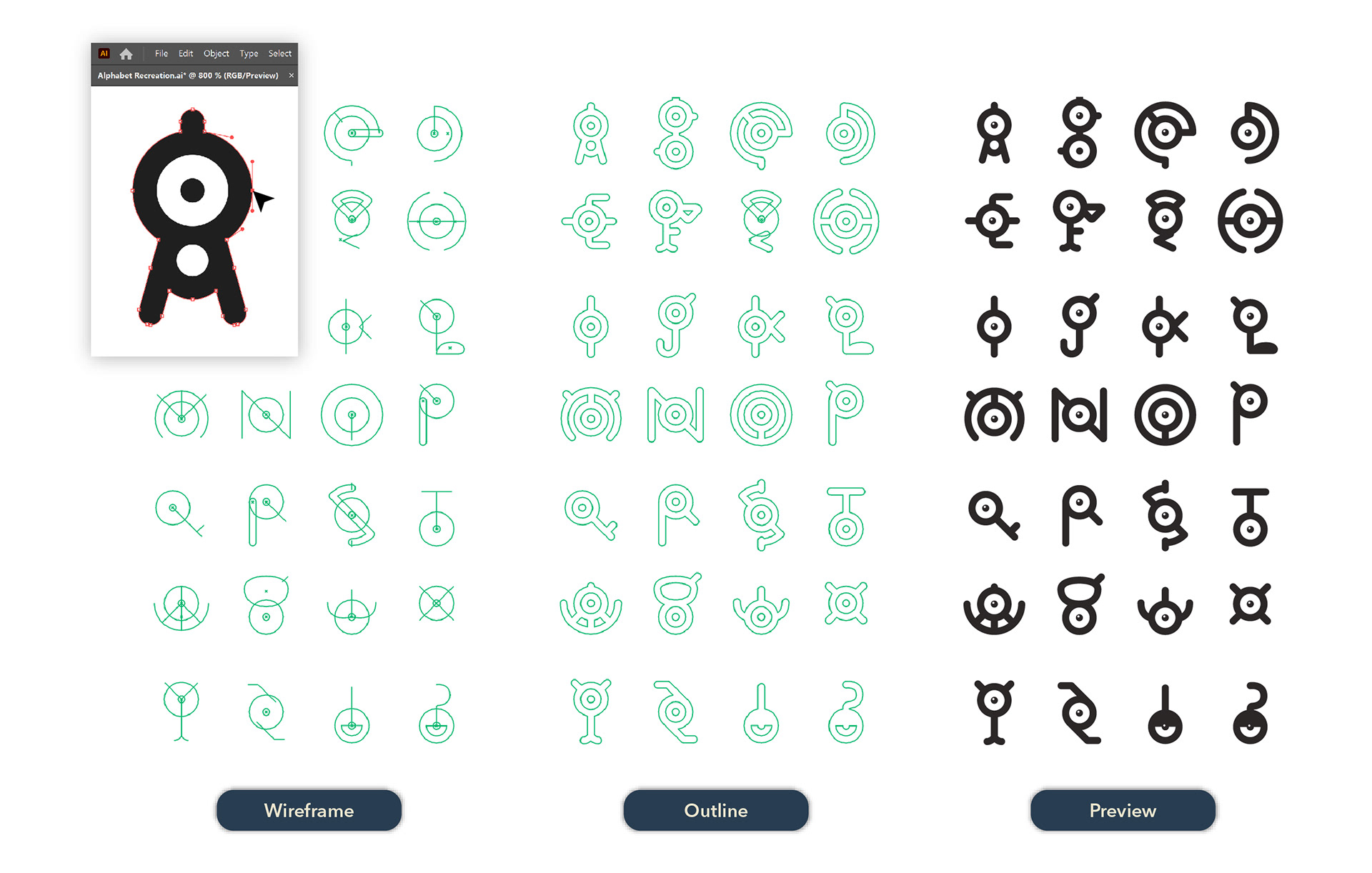
Vector linework in Adobe Illustrator
Vector Construction
Each character was rebuilt in Adobe Illustrator using vector linework.
This process ensured:
• Clean scalable shapes
• Consistent stroke weights
• Standardized proportions
The intermediate wireframe stage helped refine the internal geometry before producing the final outlines.
Typeface Development
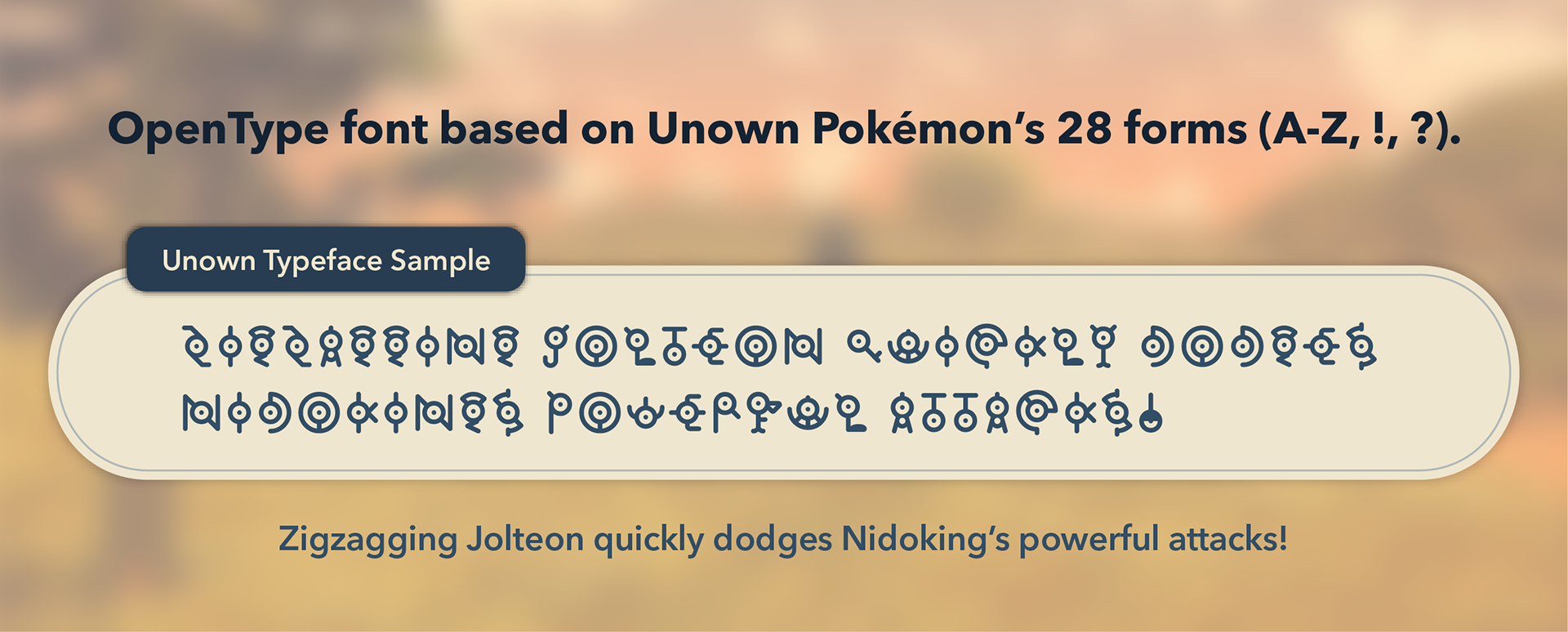
Once the forms were finalized, I mapped the characters to a working OpenType font. The 28 glyphs correspond to "A–Z", "!", and "?". This allows the Unown characters to function as a usable symbolic typeface.
Outcome
The result is a fully functional Unown-inspired typeface system supported by a library of vector and 3D assets. This project demonstrates how character-based iconography can evolve into a broader visual language suitable for branding, products, and storytelling.